Introduction
By regulating voltage and current, they protect equipment from overloads, spikes, and surges. Power supplies are a crucial part of automation systems, manufacturing equipment, sensors, and controllers as they safeguard against electrical faults that may damage machinery and lead to downtimes. Creating a power supply from scratch is good if a product or application caters to specific needs. However, a custom design may not be feasible if time-to-market pressures are high. Such difficulties compel design engineers to choose a power supply unit they can effortlessly incorporate into the design. This article will examine the numerous industrial power supply types, including their characteristics, applications, and benefits.
Types of industrial power supply
The industrial power supplies use rectifiers to convert the alternating current (AC) power from the primary grid into the required direct current (DC) power. The output is then filtered for stability. A regulated power supply maintains a steady output voltage, with a feedback loop ensuring consistency. Beyond essential functions, industrial power supplies often include overvoltage, overcurrent, and thermal protection to safeguard equipment and the power supply from damage. Industries use mainly three types of power supplies: a) Regulated linear power supplies, b) Switch mode power supplies, and c) Programmable power supplies. Unregulated power supplies, although cost-effective, are imprecise, inefficient, and unnecessarily convert a large amount of energy into heat. Additionally, they generate considerable electrical interference, diminishing overall performance. DC motors and solenoids use unregulated power supplies.
Regulated linear power supplies – These provide steady DC voltages despite network fluctuations, with capacities ranging from a few to several hundred watts. Linear power supplies are robust and employ a multi-stage process that includes a transformer, rectifier, filter, and regulator to regulate voltage. At first, the transformer converts the incoming AC power into a suitable voltage level for downstream devices. Following this, this voltage transforms from AC to DC by integrating filters and rectifiers, ensuring seamless operation. Finally, the regulator provides stability in the power supply. The benefits of this solution are low noise, reliability, and cost. These are ideal for audio equipment and lab power supplies, which are easy to set up and have excellent stability and temperature resilience.

Figure 1: Components of a typical linear power supply(Image source)
Switching mode power supplies (SMPS) - These compact and efficient power supplies are also referred to simply as "switchers,” They are smaller and more cost-effective than linear power supplies despite having more components. SMPS are lightweight and offer broad input and output ranges with superior efficiency. They feature complex circuitry, increased noise, and high-frequency operation, necessitating detailed interference mitigation measures. Like their linear counterparts, SMPSs employ pulse-width modulation (PWM) for efficiency. However, this modulation facilitates efficient AC-to-DC power conversion and minimizes energy wastage. Furthermore, the lower transformer VA ratings on PWM duty cycles allow the use of smaller-sized components. However, this efficiency comes with a trade-off—SMPS generate more electrical noise than linear ones due to internal electrical switching. Yet, SMPS has distinct advantages. Unlike linear supplies limited to step-down voltage, they can step up or step-down voltage. Additionally, they adapt to different AC inputs to generate steady DC output, offering versatility.

Figure 2: Components of a typical switch mode power supply(Image source)
The SMPS circuits are intricate networks of energy storage elements, such as inductors and capacitors, alongside power-handling transistors and rectifiers, organized according to specific topologies. A few examples are:
- Isolated Fly-back Converter- The topology uses a single major magnetic component—a coupled inductor for energy storage and isolation. It enables energy transfer to the secondary and load during the switching element off-time. It offers a cost-effective method for AC to DC power conversion due to its simplicity and low component count. DC-DC converters use Isolated fly-back converters at low-power applications (<;100W) such as mobile chargers, CRT televisions, and monitors.
- Forward converter - This topology uses a transformer and an output inductor for energy transfer during the switching element on time, with forward converters applied in AC power supplies and DC-DC converters. In contrast, energy in the output stage is stored via the inductor and capacitor, not in the transformer.
- Buck converters- The buck converter excels in applications requiring a regulated output voltage lower than the input, ensuring efficiency and reliability. This step-down DC-DC converter uses an inductor and capacitor for energy storage to maintain stability, especially in battery-powered or automotive systems with fluctuating voltages.
- Boost converters - The boost converter excels as a DC-DC power supply, elevating any input voltage to a fixed, regulated output. Ideal for insufficient energy sources, this topology stores energy in an inductor before releasing it through a diode and capacitor, making it perfect for solar systems, battery boosters, or telecom equipment.
To learn more about switching topologies, please check with Farnell - Voltage Topologies – Part 1 of 2 (farnell.com) and Voltage Topologies – Part 2 of 2 (farnell.com)
Programmable power supplies - Traditional linear and early SMPS doesn’t meet the dynamic power needs of modern electronics. Programmable DC power supplies exercise precise control over their output parameters by integrating various components and delivering optimal power to electronic devices. A power converter acts as the fundamental supply source, and a sophisticated control circuit with communication capabilities interfaces with processors for seamless operation. The programming circuitry allows users to define specific parameters while power, voltage, and current control mechanisms enforce these settings. Precision is enhanced by readback circuits that provide feedback on output performance. Programmable power supplies offer the flexibility of delivering AC, DC, or combined AC/DC outputs to meet various application requirements. For example, a smart charger equipped with a programmable power supply begins by delivering a constant current (CC) to charge the battery. The CC transitions to constant voltage (CV) as the battery approaches total capacity. If the power supply exceeds the user's current limit in CV mode, it will automatically switch back to CC mode.

Figure 3: Block diagram of programmable power supply8(Image source)
| Regulated linear power supplies | Switch mode power supplies | Programmable power supplies |
|---|---|---|
| Low noise amplifiers | Personal computers, power stations, ovens, fridges, etc. | Industrial processes like electroplating and laser machinery |
| Data acquisition - including sensors, multiplexers, A/D converters, and sample & hold circuits | Security systems, railway systems, internet servers, power stations, airports, etc. | Electric vehicle charging systems |
| Automatic test equipment | Smartphones and, in the automobile sector, | Automated test equipment |
| Laboratory test equipment | Battery chargers | Equipment testing, inspection, certification, and calibration processes |
| Anywhere, precise regulation and low ripple are required | To stabilize the electric current and help to balance the overload current | Debugging and simulation |
| Control circuits | Used to balance unregulated DV input voltages | Medical diagnosis and treatment systems, and gas generation systems like hydrogen and helium |
Table 1: Industrial application of different power supplies
Selection criteria of industrial power supplies based on critical components and features
You should thoroughly understand your equipment's power demands, operational parameters, and environmental realities before opting for a particular industrial power supply (PSU).
- Accurate assessment of industrial equipment power requirements- Review the device specifications before selecting the appropriate supply type. Whichever type you choose, it is crucial to understand the DC input requirements of every device and calculate the power consumption for adequate supply provision. For example, switching supplies typically have an adjustable output voltage and are equipped with contemporary features like over-voltage protection and sensors. Power considerations compel a comprehensive evaluation of the specific requirements of each item associated with the power supply. It is advisable to calculate the power requirements precisely and factor in 25 percent for spare capacity and optimal performance.
- High peak load for motor-based equipment- Many electromechanical applications, such as motors powering pumps or drives, need high peak current for brief periods. The demand occurs during startup to overcome mechanical resistance or intermittent activation of an application's sub-areas. Select a power supply that can manage both average power needs and temporary peak loads. Despite such peaks, the average power requirement remains low. It makes no sense to go for a bigger unit as a unit sized for average power with peak load capability offers no drawbacks regarding operational lifetime or reliability compared to its larger counterpart for peak loads. Various household appliances, including coffee machines, food blenders, kitchen hoods, robot vacuums, automatic doors, and electric windows/drawers, feature such motors in real-life applications.
- Output voltage regulation- Power supply regulation ensures stable output voltage for sensitive equipment (like computers and sensors) despite input and load variations. Regulating components like zener diodes, series transistors, or integrated circuit regulators maintain consistent output within specified tolerances. In regulated supplies, the input to the holding device exceeds the expected output, allowing operation across a wide input voltage range. The regulating device, usually in series with the output, drops the voltage to maintain stability, with different regulating circuits tailored to specific power supply designs and stability requirements.
- Load & line regulation- Line and load regulation are crucial for ensuring a stable output unaffected by variations in input voltage or load fluctuations. Line regulation refers to sustaining output voltage despite variations in input voltage, which is critical for unstable input sources. Load regulation, on the other hand, is concerned with keeping a consistent output despite variations in load. In constant voltage or current mode, load regulation provides consistent performance throughout the supply's output capability.
- Series & parallel operation- When an application uses several power supplies, it's essential to evaluate the safety regulations of the system. Power supply and DC-DC converters can be connected in series, but you must exercise caution to avoid interference between them. The overall output voltage must not be greater than the operational output-to-earth breakdown voltage of either one of the power supplies.A standard solution is to increase the power by connecting two or more power supplies. Make a star formation with the load in the center to ensure almost equal lead lengths. Avoid looping one power supply to the next to prevent connector overloads and poor sharing.

Figure 4: Block diagram of (a)series operation(Image source) (b)parallel operation(Image source)
- Protections: You must consider several voltage and amperage specifications before you select an appropriate power supply. Additionally, safety and protection are of equal importance in technical applications. Critical considerations for circuit protection and reliable operation include Overvoltage protection (OVP), Overcurrent Protection (OCP), Short Circuit protection, circuit breakers, electronic fuses, grounding and isolation, and thermal protection. Built-in OVP circuits automatically shut down the output when the voltage exceeds a preset limit, whereas OCP circuits trip and cut off the current if it surpasses a defined threshold.

Figure 5: (a) Over voltage protection(Image source) (b) Over current protection(Image source)
- Form Factors: Power Supply Form Factors dictate components' physical shape and layout, ensuring interchangeability based on size and fit. PC designers can opt for standard PSU form factors or create custom ones. Traditional choices offer various affordable replacement parts of varying qualities and power outputs, while custom designs entail additional time and expense. Moreover, custom supplies are exclusive to the original manufacturer.
| Modern power supply Form Factors | Originated From | Connector Type | Associated MB Form Factors |
|---|---|---|---|
| LPX style | IBM PS/2 Model 30 (1987) | AT | Baby-AT, Mini-AT, LPX |
| ATX style | Intel ATX, ATX12V (1985/2000) | ATX | ATX, NLX, Micro-ATX |
| SFX style | Intel SFX (1997) | ATX | Flex-ATX, Micro-ATX |
Table 2: Power Supply Connector Types and Form Factors
- Certifications, standards, and compliances: A power supply must adhere to safety standard certifications like UL, CE, IEC, and FCC. Such compliance fosters a secure operating environment. Energy efficiency standards such as 80 PLUS certification promote sustainability and long-term cost savings. RoHS compliance minimizes hazardous material usage, contributing to environmental responsibility. Standards like EN 50155 and MIL-STD-810 ensure reliable performance across diverse environments. Various applications require adherence to ripple and noise standards like MIL-STD-1275 and EN 61000-6-3. REACH and WEEE regulations enforce supply chain transparency and electronic equipment recycling, imposing financial obligations on producers.
Installation considerations and wiring methods for industrial power supplies
A power supply installation can suffer from compatibility issues with potential safety concerns. It is essential to exercise caution due to high voltage components and prioritize safety measures for yourself and your equipment during installation. Use tools like anti-static mats to mitigate risks. You must efficiently manage the cables to prevent clutter and enhance airflow.
- Mounting methods: Use standard mounting methods when you install an industrial power supply for effective heat dissipation. Reducing the ambient temperature or load rate would be best to prevent overheating. Consult the table for guidance or refer to the datasheet for specific mounting instructions.
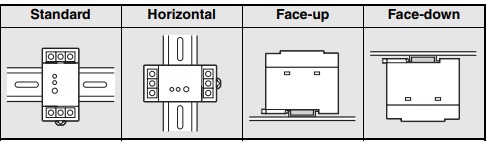
Figure 6(a): DIN Rail Mounting models(Image source)

Figure 6(b): Screw Mounting Models(Image source)
- Installation space: Ensure adequate spacing between side-by-side mounted power supplies by following the supply's product manual guidelines.
- Cooling Strategies for lowering internal temperature: The lifespan of any power supply can be extended by lowering its internal temperature. The internal temperature reaches saturation when heat generation equals dissipation—inadequate dissipation results in a continuous temperature rise, highlighting the importance of better dissipation by proper mounting. Optimize performance by operating the power supply within the specified ambient temperature range outlined in the derating curve.
Choosing a wire diameter that can handle the load current (IO) effectively when wiring the system is crucial. The power supply's output voltage (VO) must remain within the specified fluctuation range. You must also consider the allowable current for load short circuits, aiming for at least 1.6 times the power supply's rated output current to prevent potential issues. Refer to this table during power supply installation:
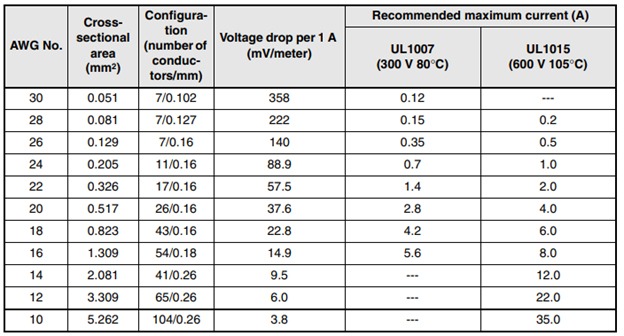
Table 3: Selection of wires
- Wiring to Prevent Noise Interference

1.Keep input and output lines separate and use twisted cables to minimize induced noise.

2.Opt for short and thick input lines to reduce noise radiation.

3.Avoid looping input or output lines to prevent noise radiation and interference.

4.Use short, thick ground wires to maintain the effectiveness of noise filters.

5.Install a noise filter on the input side to mitigate issues caused by AC line surges, grounding it with a short, thick wire.

6.Employ shielded cables for remote sensing and control signal lines to prevent noise induction and ensure reliable operation.
Figure 7: Different wiring orientation(Image source)
Power supply failure modes and optimal maintenance practices
Power supplies function optimally when operated within design limits and enjoy a reasonable service life. However, they will eventually fail- gradually or catastrophically. Various factors, such as equipment age, transient voltages, load demands, operating environment, and component reliability, influence the functional lifetime before signs of degradation surface. A few power supplies have SMPS with integrated fans (for forced-air cooling), have a finite lifespan, and need periodic replacement. The frequency of fan replacement depends on the power supply model. The following are some common failure categories with possible clauses.
| Fault category | Possible reasons |
|---|---|
| Failed output or NO output | Primary electrolytic capacitor failure, blown fuse, power transistor, and other semiconductors short circuit, No input at the power supply, defective power cord connection, etc. |
| Erratic output | Voltage adjustment control is damaged, the load is functioning as a constant current source at the current limiting value of the power supply, and defective components like transistors, resistors, rectifiers, and ICs in the regulation circuit. |
| Open circuit | An open component within the power supply unit, dry solder at any component point, broken or damaged lead of any element. |
| High output | Due to an open circuit on one or more of the rectifier diodes, primary or secondary windings of the transformer are shorted, the filter capacitor open circuit, |
| Low output | Load requires more power than the power supply specifications, faulty diodes, etc. |
| Short circuit | Internal components may suffer damage due to transient voltage, component degradation can lead to loss of dielectric properties, such as transformer windings shorting and capacitor dielectric loss, shorted turns may be present in the transformer's primary or secondary winding. |
| High ripple | The filter capacitor may degrade, leading to low-frequency ripple, Components of lumped element filters, such as inductors and capacitors, may experience degradation, and components in the regulation circuit may degrade and age, especially regarding high-frequency noise. |
Table 4: Different failure modes and failure clause
Most utilities have implemented power supply maintenance programs with varying degrees of success. A few respond only to alarms indicating non-operational power supplies, while others replace them at set intervals independent of equipment condition. Many utilities are regularly repaired during scheduled outages or at time intervals to ensure continued operation.

Figure 8: Inspection and corrective action(Image source)
Environmental challenges for industrial power supplies
Industrial environments impose various stresses on power supplies, including particulate contamination (dust), humidity and potential condensation, exposure to aggressive chemicals, operation across wide temperature ranges, and susceptibility to electromagnetic interference.
- Temperature Extremes: Significant temperature changes influence component performance and dependability. Cold temperatures can diminish capacitance and create problems during startup. High temperatures can cause overheating of parts and a shorter lifespan.
- High humidity or wetness: These can cause electrical shorts and corrosion unless components are conformally coated.
- Air particles like sand and dust: Intakes and heatsinks can be clogged, raising temperatures, and perhaps becoming conductive and corrosive when mixed with moisture.
- Electrostatic discharge(ESD): It can cause harm to sensitive electrical devices if improperly shielded.
- Electromagnetic interference(EMI): It can reduce power supply performance (susceptibility) or cause surrounding electronic equipment to malfunction (emissions).
- Vibration: Components are susceptible to damage if not appropriately cushioned, and vibration can cause mechanical fatigue, loosened fasteners, and cracked connections.

Figure 9: Harsh environmental factors for power supplies(Image source)
Ruggedized power solutions have diverse applications:
Manufacturing sectors:
- Oil & gas: From scorching deserts to frigid seas, these guardians fuel exploration and production.
- Mining: Delving deep requires reliable power for drills, conveyors, and safety equipment.
- Remote outposts: They depend on communication towers, weather stations, and research facilities for uninterrupted connectivity.
Infrastructure area:
- Toll roads and transportation: Ensuring smooth traffic flow hinges on reliable power for gates, signage, and communication systems.
- Water treatment plants: The availability of clean water requires dependable power for pumps, filtration systems, and monitoring equipment.
On the move:
- Fishing vessels: These powerhouses keep electronics running smoothly by battling harsh weather and salty environments.
- Automotive manufacturing and transportation: Reliable power is crucial for efficient operations, from assembly lines to on-the-go diagnostics.
- Air operations: ground support, in-flight equipment, and emergency response rely on robust power solutions.
Critical services:
- Medical services: Ensuring seamless patient care and medical equipment function requires unwavering power.
- Defense operations: From land, sea, and air, ruggedized power supplies support vital military operations.
- Space exploration: From launchpads to distant missions, reliable power is essential for pushing the boundaries of human exploration.
At a glance - what element14 offering you in different varieties of power supplies
| Product | Buy Link |
|---|---|
| AC / AC Power Supplies | Buy now |
| AC / DC DIN Rail Mount Power Supplies | Buy now |
| Isolated DIN Rail Mount DC / DC Converters | Buy now |
| DC / DC UPS - Uninterruptible Power Supplies | Buy now |
| Power Supply Accessories | Buy now |
Conclusion
Industrial power supplies play a stellar role in maintaining the seamless functioning of essential machinery. Making an informed choice when procuring the ideal power supply for your industrial needs is vital. You must understand the various types, essential features, selection criteria, and best practices for installation and maintenance. This guide offers a thorough insight into industrial power supplies tailored for technical audiences. However, remember that this serves as a foundation, and consulting datasheets, manufacturer guidelines, and experts are crucial for precise application and equipment requirements.






Technologies





Artificial Intelligence
One of the greatest revolutions in all of human history! AI is an all-encompassing concept that incorporates human intelligence into machines
DEVKIT HQ
The #1 Destination for Embedded Evaluation Boards, Development Kits, and Tools
IoT Sensor to Cloud Platform
/IOTCONNECT™ accelerate your loT journey with secure, ready-to-use cloud connectivity
Further Resources
Calculators & Conversion Charts
Selection Guides and Catalogues
Essential Learning Modules
Tech Spotlights
Design Resources
Engineering Glossary
Technical Support
Parts Finder Tools